
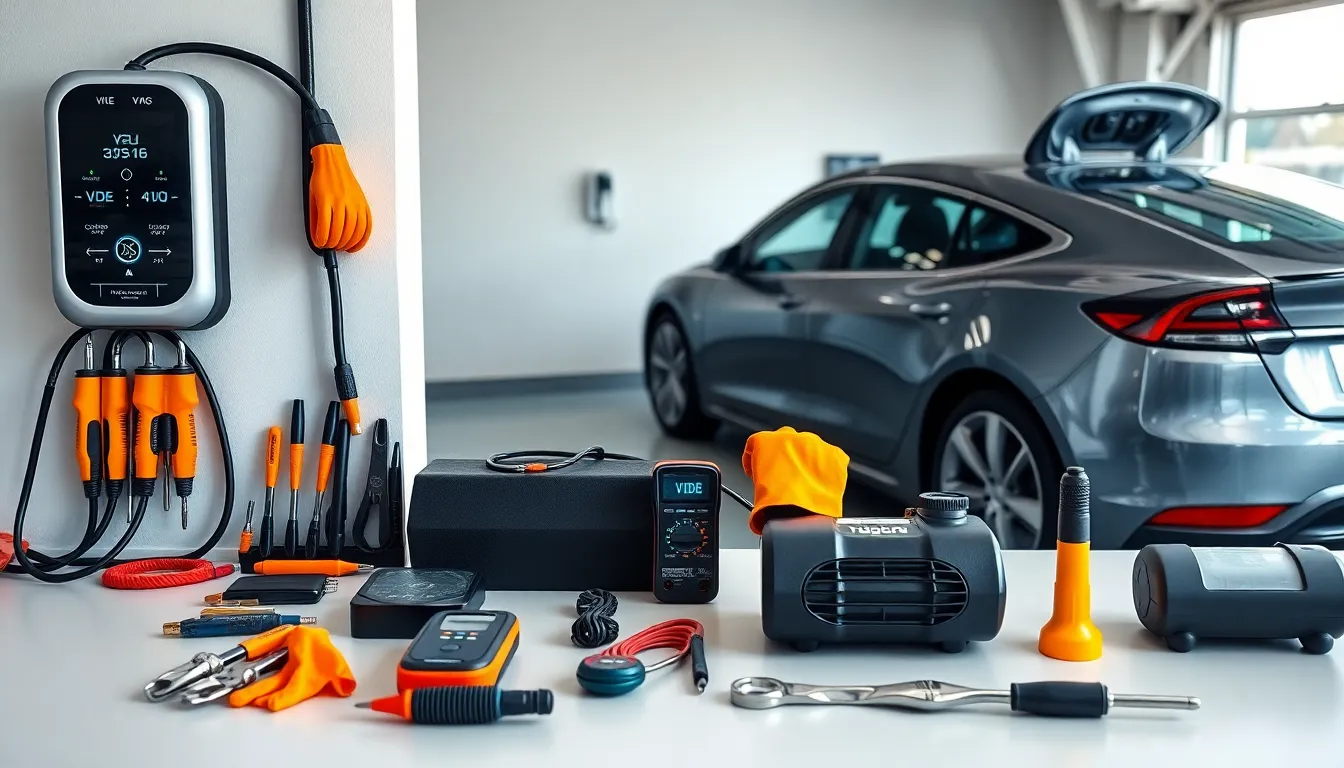
Electric vehicles tools have become essential items for anyone who owns or maintains an EV. The shift from gasoline engines to battery-powered motors means traditional automotive gear doesn’t always apply. EV owners need specialized equipment to charge, diagnose, and service their vehicles safely.
This guide covers the must-have electric vehicles tools for home garages and mobile repair kits. From charging accessories to safety gear, these items help EV owners stay prepared for routine maintenance and unexpected issues. Whether someone just purchased their first Tesla or they’ve been driving electric for years, the right tools make ownership easier and more cost-effective.
Table of Contents
ToggleKey Takeaways
- Electric vehicles tools differ from traditional automotive gear, requiring specialized equipment for charging, diagnostics, and high-voltage safety.
- A Level 2 home charger is the most practical upgrade, delivering 25–30 miles of range per hour compared to just 3–5 miles with a standard outlet.
- OBD-II scanners designed for EVs and battery health monitors help track battery degradation—the most expensive component to replace.
- Insulated tools with VDE certification and Class 0 electrical gloves are essential for safely working on 400–800 volt EV systems.
- EVs experience 20–30% faster tire wear due to battery weight, making digital pressure gauges and tread depth gauges critical electric vehicles tools.
- Keep a lithium-rated fire extinguisher and safety gear accessible, as standard extinguishers don’t work on EV battery fires.
Charging Equipment and Accessories
Charging equipment forms the foundation of any electric vehicles tools collection. Most EVs come with a Level 1 charger that plugs into a standard 120-volt outlet. This works for overnight charging, but it’s slow, adding only 3 to 5 miles of range per hour.
A Level 2 home charger is the most practical upgrade. These units connect to a 240-volt outlet and deliver 25 to 30 miles of range per hour. Popular options include the ChargePoint Home Flex and the Grizzl-E Classic. Installation typically costs between $300 and $800, depending on the electrical work required.
Portable Charging Accessories
Portable electric vehicles tools for charging include:
- Extension cords rated for EV charging – Standard extension cords can overheat and cause fires. EV-rated cords handle higher amperage safely.
- Adapter kits – Different charging networks use different connectors. A J1772 to Tesla adapter (or vice versa) expands charging options on road trips.
- Charging cable organizers – Wall-mounted hooks or retractable cord systems keep cables from tangling or sitting in puddles.
A portable Level 2 charger offers flexibility for those who rent or travel frequently. The Lectron Portable EV Charger switches between 120V and 240V outlets, making it useful in various situations.
Diagnostic and Monitoring Tools
Electric vehicles tools for diagnostics differ from those used on gas-powered cars. EVs don’t have spark plugs or fuel injectors, but they do have complex battery management systems, motors, and electronic controllers.
OBD-II Scanners for EVs
An OBD-II scanner reads error codes from the vehicle’s computer. Not all scanners work with EVs, so owners should choose models designed for electric drivetrains. The BlueDriver Pro and OBDLink MX+ connect via Bluetooth to smartphone apps and display real-time data.
For Tesla owners, the Scan My Tesla app paired with an OBDLink adapter provides detailed battery cell data. This helps monitor battery health over time and catch degradation early.
Battery Health Monitors
Battery monitoring is one of the most important uses for electric vehicles tools. The battery pack represents the most expensive component in any EV, replacement costs can exceed $15,000.
Some monitoring tools to consider:
- Battery management system (BMS) readers – These display cell-level voltage and temperature data.
- State of Health (SoH) apps – Apps like ABRP (A Better Route Planner) and Tezlab track battery capacity over time.
- Thermal imaging cameras – A FLIR camera or smartphone attachment can spot hot cells or failing connections before they become serious problems.
Regular monitoring with these electric vehicles tools helps owners make informed decisions about charging habits and long-term vehicle care.
Safety Equipment for EV Maintenance
Working on electric vehicles requires specific safety gear. EV batteries operate at 400 to 800 volts, enough to cause fatal injuries. Even with the vehicle powered off, stored energy in the battery pack and capacitors remains dangerous.
Insulated Tools and Gloves
Insulated electric vehicles tools are rated for high-voltage work. Look for the “VDE” certification, which indicates the tool has been tested to 1,000 volts. A basic insulated tool set should include:
- Screwdrivers (flathead and Phillips)
- Pliers and wire cutters
- Socket wrenches
- Multimeter with high-voltage rating
Class 0 electrical gloves provide protection up to 1,000 volts. These gloves should be inspected before each use and replaced if they show any signs of wear or damage. Leather protector gloves worn over the rubber gloves prevent punctures.
Emergency Safety Gear
Every EV owner should keep these items accessible:
- Fire extinguisher (Class D or lithium-rated) – Standard fire extinguishers don’t work on lithium battery fires. A proper extinguisher can prevent a small thermal event from becoming catastrophic.
- Safety glasses and face shield – Electrolyte spray from a damaged cell causes severe burns.
- First aid kit – Include burn treatment supplies specifically.
These electric vehicles tools and safety items aren’t just for home mechanics. Anyone driving an EV should understand the risks and carry basic safety equipment.
Basic Maintenance Tools for Electric Vehicles
Beyond specialized equipment, EV owners still need common maintenance tools. Electric vehicles have simpler drivetrains than gas cars, but they still require regular upkeep.
Tire Maintenance Equipment
EVs are heavier than comparable gas vehicles due to battery weight. This extra mass causes faster tire wear, often 20% to 30% faster. Proper tire care saves money and improves efficiency.
Useful electric vehicles tools for tires include:
- Digital tire pressure gauge – EVs benefit from precise pressure management. Every PSI matters for range optimization.
- Portable air compressor – A 12V compressor that connects to the car’s power outlet works for roadside adjustments.
- Torque wrench – Proper lug nut torque prevents wheel damage. Most EVs specify 80 to 100 ft-lbs.
- Tire tread depth gauge – Check tread monthly to catch uneven wear patterns early.
Brake and Suspension Tools
Regenerative braking reduces brake pad wear significantly. Some EV owners go 100,000+ miles before needing new pads. But, brake fluid still needs replacement every 2 to 3 years.
- Brake fluid tester – Measures moisture content in brake fluid.
- Jack and jack stands – Choose models rated for EV weight. A floor jack with 3-ton capacity handles most electric SUVs.
- Suspension inspection mirror – Check bushings and ball joints without full disassembly.
These basic electric vehicles tools handle most DIY maintenance tasks. For major repairs involving the battery or drive unit, professional service remains the safer choice.