
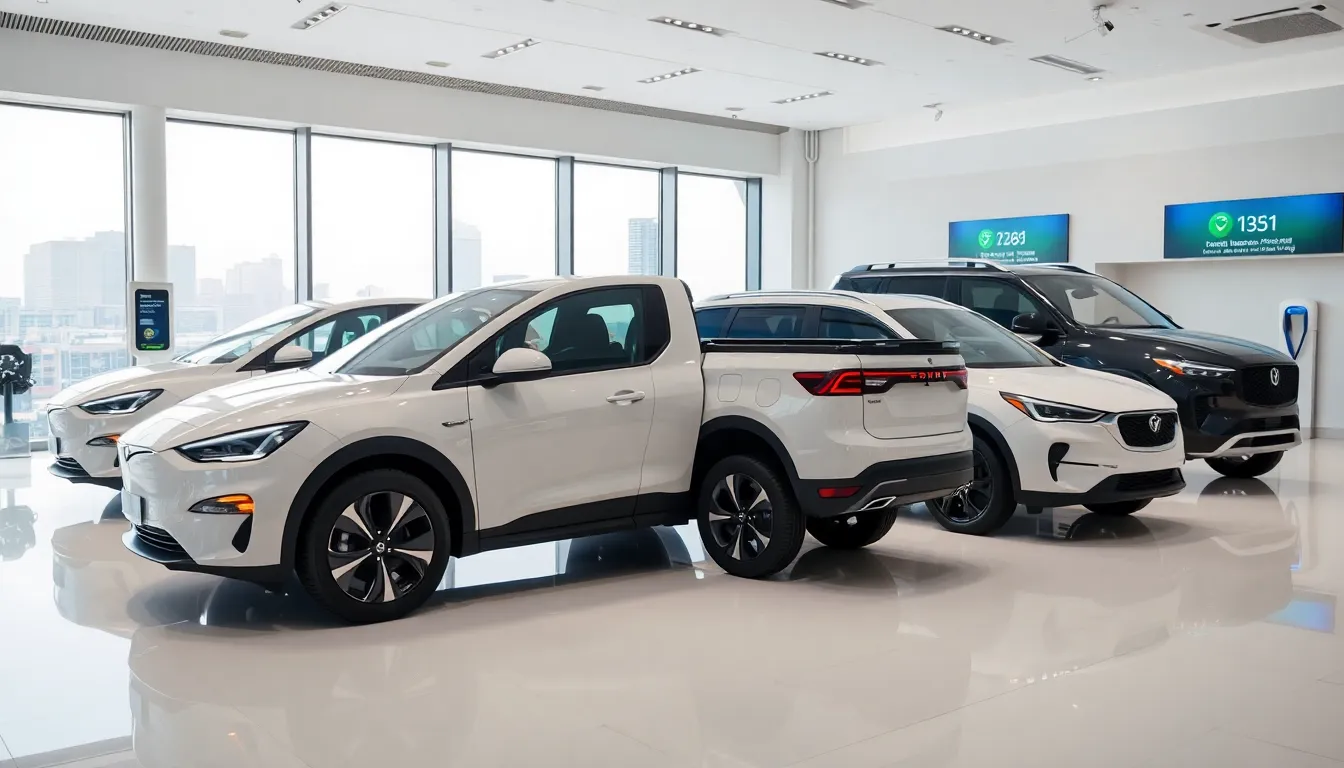
Electric vehicles examples span a wide range of categories, from budget-friendly commuters to high-performance luxury models. The EV market has grown rapidly, offering options for nearly every driver and budget. Whether someone wants a compact city car, a rugged truck, or a sleek sports sedan, electric vehicles now compete directly with their gas-powered counterparts.
This guide covers the top electric vehicles examples across five key categories. Readers will find battery electric vehicles, plug-in hybrids, electric SUVs and trucks, affordable EVs, and luxury performance models. Each section highlights specific models worth considering in 2025.
Table of Contents
ToggleKey Takeaways
- Electric vehicles examples now span five major categories: battery EVs, plug-in hybrids, SUVs and trucks, affordable options, and luxury performance models.
- Battery electric vehicles like the Tesla Model 3, Hyundai Ioniq 6, and BMW i4 offer ranges from 247 to 361 miles on a single charge.
- Plug-in hybrids such as the Toyota RAV4 Prime and Jeep Wrangler 4xe provide EV benefits while eliminating range anxiety for longer trips.
- Electric trucks like the Ford F-150 Lightning and Rivian R1T prove that EVs can handle towing, off-roading, and work applications.
- Affordable electric vehicles examples including the Nissan Leaf and Chevrolet Equinox EV start under $35,000, making EV ownership accessible to more buyers.
- Luxury EVs like the Lucid Air achieve up to 516 miles of range, while the Tesla Model S Plaid reaches 60 mph in under 2 seconds.
Battery Electric Vehicles
Battery electric vehicles (BEVs) run entirely on electricity. They have no gasoline engine and produce zero direct emissions. BEVs represent the purest form of electric vehicles examples on the market today.
The Tesla Model 3 remains one of the best-selling BEVs worldwide. It offers up to 333 miles of range and accelerates from 0-60 mph in as little as 3.1 seconds in its Performance trim. Tesla’s Supercharger network gives Model 3 owners access to fast charging across North America.
The Chevrolet Bolt EUV provides excellent value with an EPA-estimated range of 247 miles. General Motors prices it competitively, making it accessible for first-time EV buyers. The Bolt EUV includes Super Cruise, GM’s hands-free driving technology, on compatible roads.
Hyundai Ioniq 6 earned multiple awards for its aerodynamic design and impressive efficiency. This electric sedan delivers up to 361 miles of range and supports 800-volt fast charging. Drivers can add about 180 miles of range in just 15 minutes at compatible stations.
The BMW i4 blends traditional luxury with electric power. It offers a driving experience familiar to BMW enthusiasts while delivering up to 301 miles of range. The i4 M50 variant produces 536 horsepower for those wanting sportier performance.
These battery electric vehicles examples show how far the technology has come. Each model serves different needs, from efficiency-focused commuting to spirited driving.
Plug-In Hybrid Electric Vehicles
Plug-in hybrid electric vehicles (PHEVs) combine electric motors with gasoline engines. They offer electric-only driving for short trips and gas power for longer journeys. PHEVs work well for drivers who want EV benefits but aren’t ready to go fully electric.
The Toyota RAV4 Prime stands out among electric vehicles examples in the PHEV category. It provides 42 miles of electric-only range and 302 combined horsepower. Many drivers complete their daily commutes without using any gasoline.
The Jeep Wrangler 4xe proves that off-road capability and electric power can coexist. It delivers 21 miles of electric range and retains the Wrangler’s legendary trail performance. The instant torque from its electric motor actually improves low-speed crawling.
Kia Sorento PHEV offers three rows of seating with 32 miles of electric range. Families appreciate the space and the ability to run errands on electric power alone. Its 261 combined horsepower handles highway merging with ease.
The Volvo S60 Recharge combines Scandinavian design with plug-in hybrid technology. Drivers get 41 miles of electric range and a refined interior. Volvo positions this sedan as a step toward its fully electric future.
PHEVs serve as a practical bridge for many buyers. They reduce fuel consumption significantly while eliminating range anxiety.
Electric SUVs and Trucks
Electric SUVs and trucks have transformed what buyers expect from EVs. These larger electric vehicles examples prove that electric power works for families and work applications alike.
The Ford F-150 Lightning brought electric power to America’s best-selling truck. It offers up to 320 miles of range and can power a home during outages with its Pro Power Onboard feature. The Lightning tows up to 10,000 pounds, though range decreases while towing.
The Tesla Model Y dominates global EV sales. This compact SUV delivers up to 310 miles of range and seats up to seven with the optional third row. Its cargo capacity rivals many larger gas-powered SUVs.
Rivian R1T pioneered the electric adventure truck segment. It features a gear tunnel for storing equipment and offers up to 400 miles of range with the largest battery pack. The R1T handles off-road terrain impressively.
The Chevrolet Silverado EV targets truck buyers who need serious capability. It provides up to 450 miles of range in the RST trim and includes a midgate that extends the bed. GM designed this truck for both work and personal use.
Kia EV9 offers three-row seating in a stylish package. Families get 304 miles of range and a spacious interior. The EV9 supports vehicle-to-load technology, allowing it to power external devices.
These electric vehicles examples show that EVs handle demanding applications. Trucks and SUVs no longer require gasoline to deliver the capability buyers expect.
Affordable Electric Vehicle Options
Affordable electric vehicles examples make EV ownership accessible to more buyers. Several models now cost under $35,000 after federal tax credits.
The Nissan Leaf has been an affordable EV staple since 2010. The current model starts around $28,000 and offers up to 212 miles of range. Nissan’s experience with EVs shows in the Leaf’s reliability record.
The Chevrolet Equinox EV targets mainstream buyers with pricing starting around $35,000. It delivers up to 319 miles of range and offers both front-wheel and all-wheel drive options. GM positioned this model to compete directly with gas-powered compact SUVs.
Mini Cooper SE provides electric driving in a fun, compact package. It starts around $30,000 and suits urban drivers perfectly. The Cooper SE keeps the brand’s go-kart-like handling while adding instant electric torque.
The Hyundai Kona Electric offers 261 miles of range starting at about $33,000. Hyundai includes a comprehensive warranty that covers the battery for 10 years or 100,000 miles. The Kona Electric works well as a practical daily driver.
These affordable electric vehicles examples prove that EV ownership doesn’t require a luxury budget. Federal and state incentives can reduce prices further, making electric vehicles competitive with comparable gas models.
Luxury and Performance Electric Vehicles
Luxury and performance electric vehicles examples showcase the technology’s upper limits. These models combine premium features with impressive acceleration and range.
The Tesla Model S Plaid remains the acceleration king among production EVs. It reaches 60 mph in under 2 seconds and offers 396 miles of range. The yoke steering wheel divides opinions, but the performance speaks for itself.
The Porsche Taycan delivers the driving dynamics Porsche is famous for. It handles like a sports car even though its battery weight. The Turbo S variant produces 750 horsepower and costs well over $180,000.
Mercedes-Benz EQS focuses on luxury and comfort. Its 56-inch Hyperscreen dashboard creates a futuristic cabin experience. The EQS offers up to 350 miles of range and the quiet, smooth ride Mercedes buyers expect.
The Lucid Air holds the record for longest range among production EVs. The Grand Touring version achieves 516 miles on a single charge. Lucid positions itself as a direct Tesla competitor in the luxury segment.
BMW iX M60 combines SUV practicality with M-division performance. It produces 610 horsepower and reaches 60 mph in 3.6 seconds. The interior uses sustainable materials without sacrificing luxury.
These electric vehicles examples demonstrate that EVs can match or exceed the performance of traditional supercars. The instant torque of electric motors creates acceleration that gasoline engines struggle to match.